Showing posts with label 4g lte. Show all posts

LTE: Sweden: ZTE and Hi3G Sign US$74 Million Deal.

WorldWide Tech & Science. Francisco De Jesùs.

LTE: Sweden: ZTE and Hi3G  Sign US$74 Million Deal.

ZTE has signed an agreement with Hi3G Sweden worth UD$74 million to deploy several UMTS/LTE TDD/LTE FDD base stations, as well as auxiliary microwave and data transmission equipment over the next three years.


"We are very glad to ink the deal with Hi3G in Sweden where the two companies launched the world’s first multi-mode LTE network,” said Mr. Huang Zheng, CEO of ZTE Sweden. "

According to the company, its Uni-Ran solutions have effectively helped Hi3G Sweden to now integrate three modes and five frequencies into one network which started into commercial operation of large-scale LTE TDD network at the end of 2011.

LTE: Japan: Ericsson to provide SoftBank LTE in major cities.

WorldWide Tech & Science. Francisco De Jesús.
LTE: Japan: Ericsson to provide SoftBank LTE in major cities.

Japanese operator SoftBank has announced that Ericsson will build its LTE network in Japan’s major cities, such as Tokyo, Osaka and Nagoya and covering more than half the country’s population. 

The deal is the Swedish infrastructure company’s largest LTE contract in Japan. SoftBank is also working with Nokia Siemens Networks, which will help build its FDD-LTE network and expand its HSPA+ network.

LTE: Is the world redefining the wireless experience with LTE 4G.

WorldWide Tech & Science. Francisco De Jesús.
LTE: Is the world redefining the wireless experience with LTE 4G.

In 2009 Alcatel Lucent  in some way projected the vision of how the world will be connected wireless using LTE 4G networks, as you can watch on the video below.

Microsoft is promising Office 15 on a car, on a train , on a bus, on a plane and of course on any device, seamlessly connected. It looks like the original idea  that WebOS would eventually be the operating system linking a wide range of connected devices , has been contagious  to every mobile brand software and hardware manufacturer, at this time.

The question is : Are the worldwide carriers networks ready for this wireless experience Alcatel Lucent vision LTE 4G at this time, after  3 years now?
Countries worldwide have to overtake their  diverse frecuencies range, pointing to an standard on LTE networks.

700MHz and 2,100MHz are used in North America, 
800MHz and 2,600MHz in Western Europe, the Middle East and Africa, 
800MHz, 1,800MHz, 2,300MHz and 2,600MHz in Eastern Europe, 
and 1,800MHz and 2,100MHz in Asia Pacific.

The frequency bands adopted for LTE networks around the world in 2015 will have 38 combinations, with 700MHz to have the largest proportion at 16%, 2,100MHz to have 13%, 2,600MHz 11% and 2,500MHz 10%, the sources cited Wireless Intelligence under the GSMA as indicating.

LTE smartphones, tablets and any mobile devices not supporting the frequency bands adopted in a region cannot be used for roaming, an essential problem that chip designers and smartphone makers need to cooperate to solve.

So, when this  convergence point  will happen to have all your wide range of  simultaniouslessly connected devices via LTE 4G?

The New iPad useless for European 4G LTE networks. ?

WorldWide Tech & Science. Francisco De Jesús.


The New iPad useless for European 4G LTE networks.
The new iPad WiFi + 4G put up for pre-order in Europe yesterday supports the same 700MHz and 2100MHz LTE bands as the AT&T version in the US; however, actual LTE roll-out in Europe is expected to use the 800MHz, 1800MHz and 2600MHz bands.

According to Slashgear, even though LTE network is almost inexistent in Europe, as soon as the new technology is deployed, it will only support devices that work on 800MHz, 1800MHz and 2600MHz bands.

The New iPad have been confirmed to support 700MHz and 2100MHz LTE bands, which are fully compatible with the US-based carrier’s network. (AT&T)

Both the international and the AT&T models have the same quadband UMTS/HSPA/HSPA+/DC-HSDPA and quadband GSM/EDGE support; the Verizon model uses 700MHz LTE and dualband CDMA/EVDO Rev.A.

In Japan, meanwhile, although the iPad is also branded WiFi + 4G, the version there doesn’t have any LTE support. Instead, it tops out at DC-HSDPA

This basically makes the new iPad useless in Europe when it comes to 4G LTE data speeds. European customers who decide to purchase this model and plan to use it in their region will be limited to DC-HSDPA  data speeds.


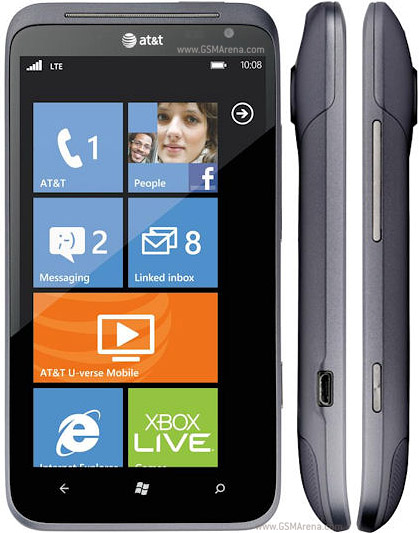
HTC unveiled the Titan II 4G LTE windows phone for AT&T.

WorldWide Tech & Science. Francisco De Jesús.


HTC has introduced the HTC TITAN II, its first Windows Phone that runs on a 4G LTE network.

The new smartphone includes the largest display among Windows Phones, a16-megapixel digital camera and access to 4G LTE speeds.

The HTC TITAN II features a 4.7-inch super LCD capacitive touchscreen display, a 1,730mAh lithium ion battery and offers quick and easy access to the latest movies and TV shows via HTC Watch and on-the-go gaming with Xbox LIVE.

HTC TITAN II is provided with access to AT&T's 4G LTE network paired with Qualcomm's 1.5 GHz Snapdragon S2 processor to deliver fast web surfing, streaming and downloading and also includes the Live Tile display that brings friend and family groups to life and delivers the latest updates and news from social networks directly to the home screen.

In addition, the new Windows Phone also enables 720p HD video recording with the rear-facing camera, as well as on-the-go video chat over Wi-Fi with its 1.3-megapixel front-facing camera.

HTC TITAN II enhances connectivity, efficiency and productivity for busy consumers with its large on-screen keyboard and instant access to Windows Phone Office Hub, Microsoft Exchange 2010 and Outlook Mobile.

HTC CEO Peter Chou said HTC's history of innovation in 4G technology includes delivering the first 4G-powered devices to each major carrier in the US, so it is exciting today to continue that leadership with the first 4G LTE Windows Phone, the HTC TITAN II.

"This full-featured smartphone combines HTC's design with AT&T's high-speed 4G LTE network and Microsoft's powerful Windows Phone software, giving people more of what they crave," said Chou.

AT&T rumored launch is set to March 18,2012, apparently putting the debut on the exact same day as the Nokia Lumia 900, another Windows Phone. The $200 price with a two-year contract is standard for a high-end model from AT&T, but above the rumored price of Nokia's upcoming rival device.

Specifications summary:

This phone will ship with Windows Phone 7.5 Mango when it is released. Customers will be receiving a 4.7-inch device with a Super LCD display. It will be powered by a 1.5GHz Snapdragon S2 processor, will contain 16GB of storage, and will have 512MB of RAM.


Perhaps the most impressive feature of the HTC Titan II is its 16MP rear-facing camera with an f/2.6 28mm wide-angle lens. In addition, this will be one of the first Windows Phones to be able to access the super-fast AT&T LTE 4G network.

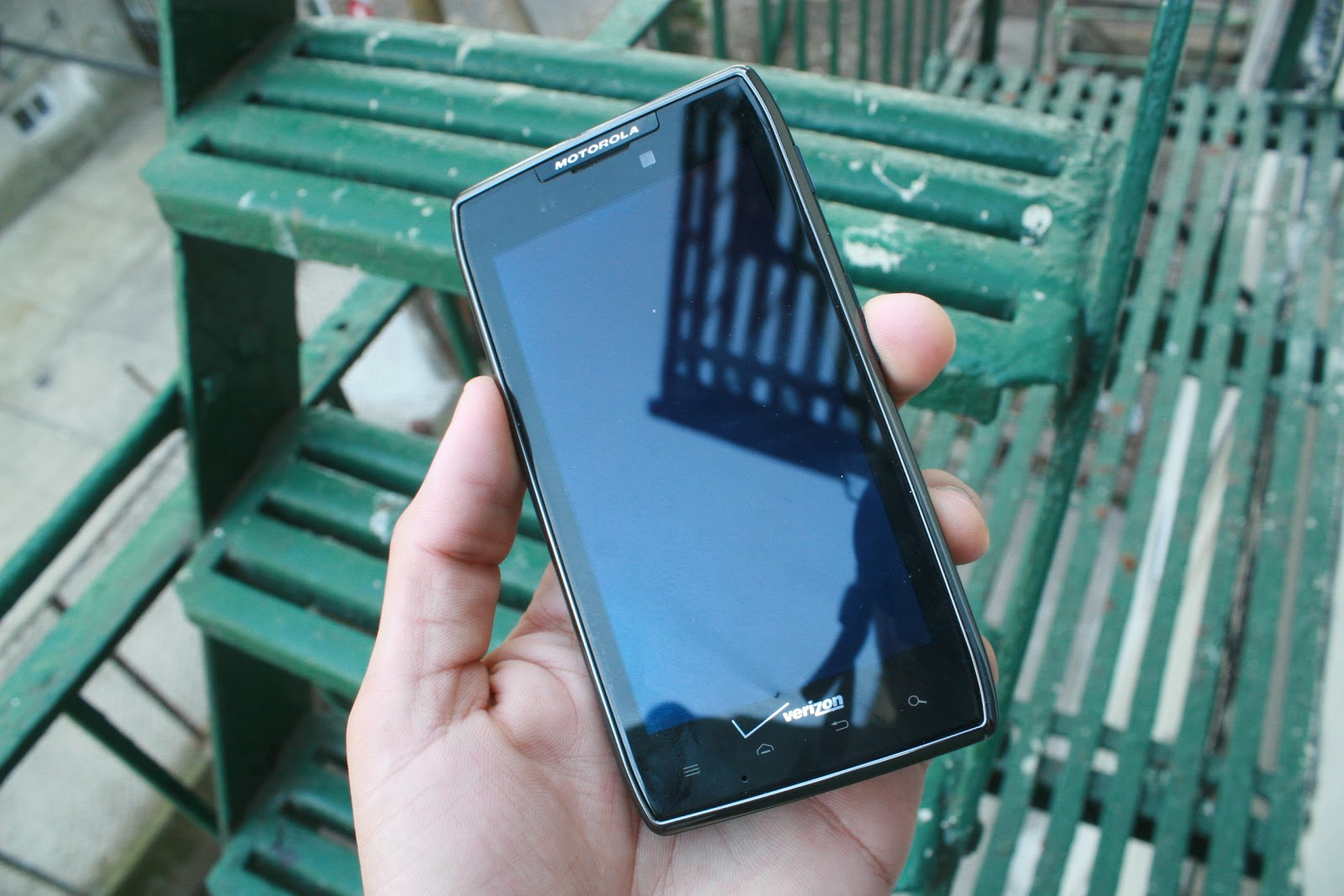
Motorola Droid Razr Maxx battery life dazzles on a 4G LTE network.

WorldWide Tech & Science. Francisco De Jesús.


Battery life on the Razr Maxx is a dazzling thing. Even with moderate use, the phone goes at least fifteen hours without need for a charge. Keep in mind that much of this data was transferred is over an 4G LTE connection, making the Maxx’s battery life that much more amazing in comparison to 3G phones than can barely scratch eight hours.

At 21 hours, the Droid Razr Maxx offers a talk time almost double that of the original Droid Razr. That, of course, is due to its 3,300 mAh battery, which dwarfs the 1,780 cell found in its predecessor.

And you won’t get a more useful metric than that. Unless you are running YouTube for hours, or doing something similarly taxing and unlikely, it will probably take a whole lot of work to drain the Razr’s Maxx’s battery. Which is certainly a good thing.

Another notable bit about the battery is that, while it lasts quite a long time, it does take a bit longer to charge compared to, say, the Nexus S 4G.

Source: ZDNet.